
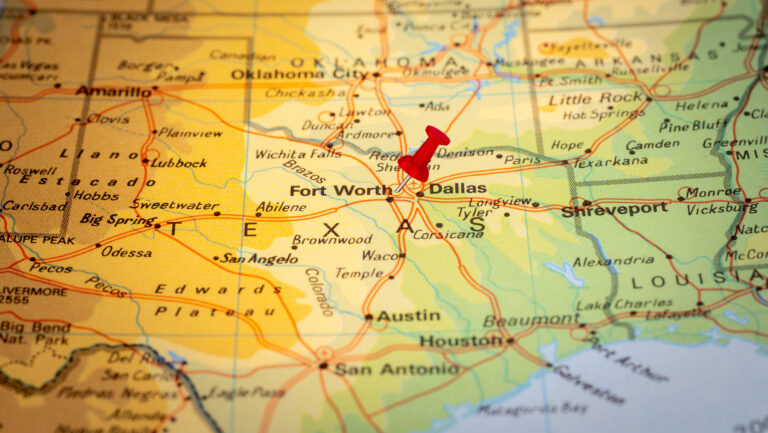
Once a year, publications around the country attempt to tackle the same question:
Which housing markets are expected to perform the best over the next year?
For the past few years, we’ve seen one market repeatedly rank high on their lists.
Dallas–Fort Worth.
The Metroplex landed at the top of the Emerging Trends in Real Estate 2026 report published by PwC and the Urban Land Institute. That marks two years in a row DFW has claimed the top spot.
If you live or work in North Texas, you probably don’t need national rankings to tell you things are booming. You see it when you look around. Developers are breaking ground on new subdivisions farther into what were once considered the outskirts. Companies are building campuses where there used to be nothing. Construction is everywhere.
The question is why?
Why does Dallas–Fort Worth keep appearing at the top of these lists? And what does that mean for homeowners here?
A Market Built on Jobs, Not Just Hype
If there was one common theme among most of the experts’ lists this year, it was employment.
Dallas–Fort Worth continues to land at the top of these rankings not because of speculative bubbles. But because new companies keep choosing to relocate or expand here.
Toyota. State Farm. Amazon Web Services. TIAA.
The list goes on.
And when major businesses bring their employees here to the Metroplex, that creates a ripple effect.
People need places to live.
That housing demand fuels construction, prices, and encourages even more people to move here.
It’s a cycle. One that’s sustained by actual job growth instead of investors flipping condo units or booming industries like we saw during the oil spike a decade ago.
Of course, no state economy is perfectly diverse. But Dallas–Fort Worth comes close. And that variety makes the market here more resilient when one sector slows down.
Population Growth That Keeps Rewriting the Map
Not only is DFW growing, it continues to grow at a rate that’s stretching the boundaries of the entire region.
Our metropolitan population recently topped 8 million, making DFW the country’s fourth-largest metro. But we also grew faster than any other U.S. metro in terms of annual growth, adding more residents than anywhere else in just one year.
A lot of that influx is happening outside of the traditional downtown Dallas and Fort Worth areas. Frisco, Prosper, Celina, Kaufman County—development is spreading north, south, east, and west.
Our metro area now covers more than 9,000 square miles.
Compare that to Los Angeles and San Francisco counties. Two coastal markets that have basically run out of room to grow.
Until they do, housing supply will remain constrained. Prices in big metros on the coasts will continue to climb as a limited number of homes chase thousands of potential buyers.
But here in North Texas, we’re still growing out, not just up. Which also helps keep new inventory levels high.
Affordability Plays a Role
The standard of living in the Metroplex is another reason people keep migrating to North Texas.
Dallas–Fort Worth’s cost of living is only slightly above the national average. And our overall housing costs are actually below the U.S. average.
That means businesses can offer wages that allow workers to live comfortably. And for residents, it means we still have a somewhat balanced market in terms of opportunity vs. cost.
Which is rare to find in this day and age.
Plenty of New Construction
You know a housing market is strong when there are so many new homes being built that you struggle to find a place that isn’t recently constructed.
DFW is far from unique in experiencing a housing shortage. Coastal cities tend to have the toughest problems with limited land and tight zoning laws that prevent builders from keeping up with demand.
Not so in North Texas. New construction is everywhere.
From apartment buildings downtown to master-planned communities spanning multiple counties to build-to-rent neighborhoods all over the suburbs.
In some communities, the median age of homes is still skewed low because so much new inventory has been built over the last decade.
New construction keeps housing supply high and prices from skyrocketing too quickly. Which again, creates a more stable market than someplace that simply doesn’t allow for growth.
The Trade-Off: Slower Appreciation
The downside to all of this new construction?
Home values don’t appreciate as fast.
That’s not necessarily a bad thing though if you’re a homeowner. Slow and steady appreciation is usually more stable than markets that pop every few years.
Remember, we’re talking about long-term forecasts here. Two-year projections. Markets that are built on sustainable growth tend to hold up better over a decade or more than ones fueled by speculation.
A Market Built On:
- Jobs
- Population Growth
- Affordability
- New Construction
Is just going to perform differently than a market based on limited supply.
The One Factor That Keeps Getting More Expensive
Homeowners in Texas could see one industry continue to get more expensive, regardless of how strong our market remains.
Hail, severe storms, and higher instances of weather-related damage have driven insured losses throughout the state of Texas. As a result, home insurance premiums have skyrocketed over the past few years. Some reporting average premiums above $6,000 per year.
If home insurance continues to rise like that, it could impact:
- Monthly mortgage payments
- Rentier profitability
- Homeowners’ decisions to keep their homes long-term
Which is one headwind for a market that hasn’t really faced many.
What “Top Market” Actually Means for Homeowners
These national rankings can be useful from a 30,000 foot view, but if taken too literally they can steer you into trouble.
Regional rankings don’t dictate what happens on your block.
Just because an area “predicts” to be a top performer doesn’t mean:
- Every home will apppreciate quickly.
- Your street will flood with buyers.
- You’ll get an easy transaction.
Local real estate markets work on a much smaller scale than these kinds of lists imply.
Neighborhood by neighborhood. School district by school district. Home by home.
A strong regional economy creates a favorable backdrop. But individual outcomes still depend on condition, pricing, timing, and buyer demand.
Why Dallas–Fort Worth Continues to Perform Well
- Job relocation
- Population growth
- Affordability
- New construction
That’s going to lead to steady growth for the foreseeable future.
That’s why the region keeps showing up in reports year after year. Not because it’s the hottest market in any given month, but because it’s one of the most consistently expanding metros in the country.
That kind of consistency is worth celebrating.