
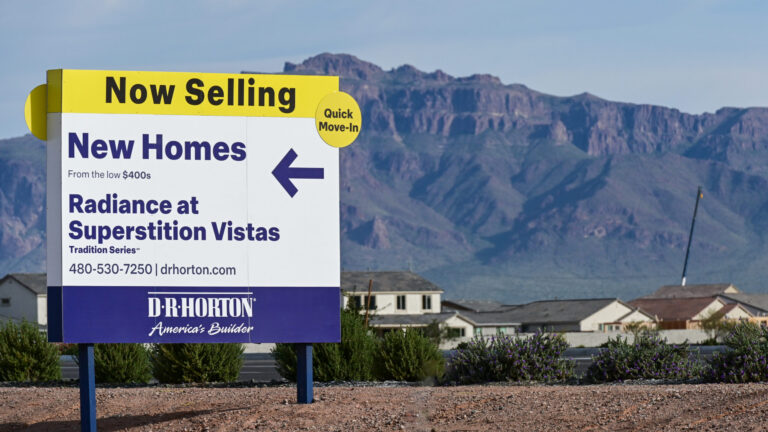
New home sales data for January was released yesterday, delayed from its typical February publishing schedule due to the government shutdown, and the headline number is difficult to ignore. It’s the worst month since 2022.
Sales of new single-family homes plummeted 17.6% from December to a seasonally adjusted annual rate of 587,000 units. Year-over-year, sales are down 11.3% from January 2025’s rate of 662,000.
The sharp decline in sales was across all regions, led by the Northeast and Midwest. But before you panic if you’re a homeowner hoping to sell this spring, know this: a single month’s worth of negative data does not a trend make.
That said, for sellers and buyers who have been confused and frustrated by mixed messaging in recent months, today’s new home sales report from HUD is worth taking a closer look at. Here’s what you need to know.
What the Report Actually Shows
January’s new home sales data is compiled by the U.S. Census Bureau and HUD — the primary source for newly sold residential units in the U.S. Data highlights from the monthly release include:
- Annualized sales pace slowed to 587,000 in January, down from December’s 712,000
- Median sale price of a new home in January: $400,500 (down 6.8% from January 2025’s median price of $429,600)
- Inventory increased to an estimated 476,000 homes at month-end, or about 9.7 months of supply at the current pace (up from December’s 8.0 months of supply)
The inventory figure deserves emphasis. Months of supply is a common way to determine whether a given housing market is a seller’s market or a buyer’s market. Most experts peg 6 months of supply as a neutral threshold.
We’re well above that at the new home level. Homebuilders have more inventory on their hands than they did this time last year, and January’s sales data shows they’re responding to softer demand with price cuts.
Why Did Sales Fall So Sharply?
Short answer: January was a nasty month for sales prospects in the Midwest and Northeast, where severe winter weather shut down markets for days at a time.
Builders were affected too, leading to a supply crunch that further exacerbated monthly sales totals. But while weather likely played a role in declining sales, it’s not the whole story.
Look at sales declines in the West: down just over 22% month-over-month. Major winter storms weren’t an issue there, but new home sales took a tumble nonetheless.
“It’s pretty clear that buyers are scared,” said Realtor.com’s senior economist. Mortgage rates were trending down ahead of January, inventory was on the rise in the new home market, and if you only looked at those two factors, you’d think sales would be higher than last January.
The problem is, buyers are paying attention to more than mortgage rates and inventory. Buyers are paying attention to global instability, political tensions, and unpredictable shifts in mortgage rates that have happened multiple times over the past two months.
Those factors aren’t conducive to signing on the dotted line, and if buyers are nervous about instability they can see, it’s no wonder monthly sales came in so low.
Builders Are Responding With Price Cuts
If you need proof that homebuilders are panicking about softening demand, look no further than new home prices.
A year-over-year drop of nearly 7% in median price isn’t necessarily a sign of doom. Yes, it’s potentially reflective of declining home values in key markets, but it’s also an acknowledgement by builders that they need to be more competitive.
Builders can’t afford to wait for buyers to embrace pricing tiers that were well understood as “too expensive” in 2024. To move inventory, they’re cutting prices and offering incentives to get deals done.
“In March, an estimated 37 percent of builders reduced their prices,” said the National Association of Home Builders. “That’s up from the 36 percent who reported cutting prices in February.”
Price cuts have become a sustained trend as inventory bloats and demand stalls. For hopeful buyers who have been waiting on the sidelines for new construction to price lower, now is your moment.
What This Means for the Existing Home Market
Existing home sales are affected by new construction inventory, but they’re not wholly defined by it.
New homes compete with the existing inventory for would-be buyers’ attention and dollars. So when builders slash prices in order to move inventory, it creates additional pressure on existing home sellers to price their properties competitively.
Sellers who were relying on peak-level pricing for their home based on outdated comparables should plan on coming down, especially if their property needs work. There’s still demand for move-in ready homes priced right, but many buyers are now more open than ever to buying new at a lower price point.
Existing sales figures haven’t been quite as bearish as this month’s new home sales report. February’s pending home sales report came in ahead of expectations, gaining 1.8% against a forecasted decline.
Pending sales are contracts that haven’t closed, so they’re not an absolute indicator that sales are picking back up. But they do show that there’s buyer demand out there, even as new construction cools.
The Report Was Delayed — And That Matters
There’s one more thing about this month’s new home sales report: it’s late.
January data was originally scheduled to be published at the end of February. The government shutdown postponed this and several other monthly housing reports, leaving sellers and buyers in the dark about the official sales figures for nearly three weeks.
That matters. Uncertainty compounds uncertainty, and the last three weeks would have benefited from clearer data on where the market stands after a brutal winter.
Today’s release paints a bleak picture, sure, but at least now we have a picture. Clarity can’t guarantee you a sale, but it can help you make informed decisions moving forward.
What DFW Sellers Should Take From This
The January new home sales report is a national snapshot, and the DFW housing market has its own trends separate from what’s happening around the country.
However, national sales data does provide anecdotal evidence that buyers are exercising more caution than mortgage rates would lead you to believe. Lower rates haven’t brought buyers out in droves because uncertainty is a highly influential factor on the buyer’s side of the market.
Sellers who understand that dynamic are already ahead of the curve. Yes, there are qualified and motivated buyers out there. But they’re also shopping the new home market for better deals, and they’re not as quick to ignore a seller’s timeframe as they might have been two years ago.
Flexibility, accurate pricing, and a realistic appraisal of your home’s value are more important now than ever.
It isn’t the market of 2021, but it isn’t 2008 either. It’s a market in transition, and today’s numbers are one more data point in that story.
*Sales data used in this post sourced from the New Residential Sales report published by the U.S. Census Bureau and Department of Housing and Urban Development on March 19, 2026. Additional context sourced from the National Association of Home Builders. *