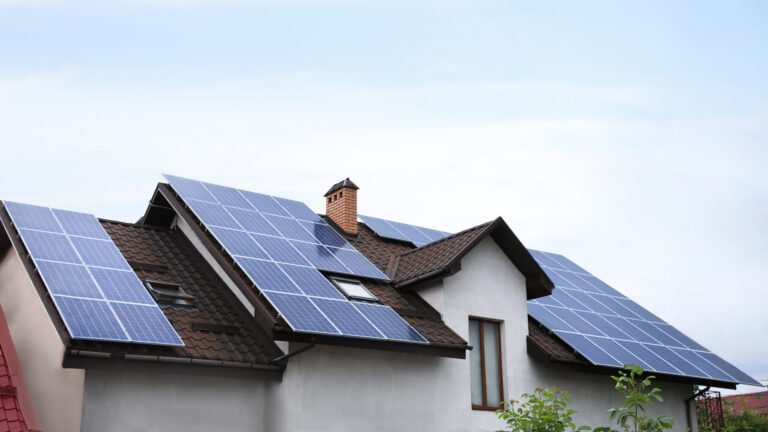
When the solar panel salesperson came to the door, the pitch made sense.
Lower electric bills. A smaller carbon footprint. Maybe a tax credit. Little or no money down. The panels would pay for themselves over time, and getting them was framed as a financial no-brainer. It’s something that would only ever add value to your home.
Nobody mentioned what happens when you try to sell.
For a lot of homeowners, that’s where the real story of their solar panels begins. On the day a buyer’s lender or title company takes a close look at how those panels were financed. And what they find can slow a sale to a crawl, knock thousands off an offer, or kill a deal entirely.
This isn’t an argument against solar. For the right homeowner in the right situation, panels can be a genuine asset. But the financing behind a lot of residential solar creates complications at sale time that almost nobody is warned about up front. Here’s what actually happens, why it happens, and what your options are if you’re trying to sell a home with panels.
The Three Ways People Get Solar and Why It Matters Enormously
The single most important fact about your solar panels, when it comes time to sell, is how you got them. There are three basic paths, and they lead to completely different outcomes.
Owned outright. If you paid cash for your panels, or financed them and paid the loan off, you own them free and clear. This is the good scenario. Owned solar is a genuine asset that adds value to a home. Studies have consistently found that homes with owned panels sell for more than comparable homes without them. One 2024 analysis found owned solar added roughly 6.9% to sale price, and Lawrence Berkeley National Laboratory research has put the value of a typical system around $15,000. If you own your panels outright, they help you. Most of this article doesn’t apply to you.
Leased, or under a Power Purchase Agreement (PPA). This is where things get harder. With a lease or PPA, you don’t own the panels, the solar company does. You’re paying for the equipment or the power it produces under a long-term contract, often 20 to 25 years. When you sell, that contract has to go somewhere. Either the buyer agrees to take it over, or you buy it out before closing. Neither is simple.
Financed with a solar loan. You took a loan to pay for the panels, and you’re still paying it off. Most solar loans come with a lien, specifically, a UCC-1 filing, that has to be dealt with before the home can transfer cleanly. If the loan isn’t paid off before the sale, that lien sits in the way.
The owned scenario helps you. The leased and financed scenarios are where deals get complicated, delayed, and sometimes killed. And because so much residential solar over the past several years was sold through leases, PPAs, and loans rather than cash purchases, a large share of homes with panels fall into the harder categories.
The UCC-1 Filing: The Thing That Kills Deals
Here’s the piece that catches almost everyone off guard.
When you lease or finance solar panels, the solar company or lender files something called a UCC-1 financing statement. It’s a legal notice, filed publicly, that says the company has a security interest in the panels. The panels are collateral for the money you owe. It’s their way of protecting their claim until you’ve paid in full or fulfilled the lease.
Most homeowners have no idea this filing exists. It wasn’t explained at the kitchen table when they signed. They find out about it for the first time when they’re trying to sell and the title company calls with bad news.
Here’s why it’s a problem. When a buyer goes to purchase your home with a mortgage, their lender runs a title search. If that search turns up a UCC-1 filing tied to the solar panels, the lender gets nervous. Mortgage lenders want their loan to be the senior claim on the property, the first in line. A UCC lien on the panels can interfere with that priority, and many lenders simply won’t fund the purchase until the issue is resolved.
In some cases, the solar company files what’s called a “fixture filing,” which treats the panels as part of the real property rather than just personal property. That can complicate the title even further.
The practical result is this: a buyer who wants your house, who has financing approved, who is ready to close, can be stopped cold because of a lien they didn’t create on equipment they may not even want. The deal that looked done falls apart over the solar panels.
This isn’t rare. Industry surveys have found that understanding how solar affects a transaction is now the single biggest sustainability-related challenge real estate agents report. Missed UCC filings are a well-known cause of closings that get delayed by weeks or collapse entirely.
Why So Much Is Often Owed
The other piece of this is the sheer size of the obligation, which surprises a lot of sellers when they finally get a payoff or buyout quote.
Residential solar systems aren’t cheap. A typical system runs $10,000 to $30,000 or more. When that’s financed or leased over 20-plus years, the total amount owed, especially early in the contract, can be substantial. Also, many leases and PPAs include escalation clauses that increase the payment 1% to 3% every year, which means the obligation grows over time rather than shrinking the way a fixed loan would.
When a seller requests an early buyout quote on a lease, the number is frequently shocking. Early termination fees can be steep, in some cases exceeding what it would have cost to just buy the system outright in the first place. Sellers who thought they were getting a deal discover that getting out of the deal is expensive.
So now the seller faces a hard choice. Pay tens of thousands of dollars to buy out the lease or pay off the loan before selling. That’s money they may not have. Or try to convince the buyer to take over the contract, which requires the buyer to qualify on their credit and to actually want a 20-year obligation they didn’t choose. Many buyers simply walk rather than inherit someone else’s solar contract.
That’s how solar panels go from “added value” to deal-killer. The math that made sense at installation works against you at sale.
What This Looks Like From the Buyer’s Side
It helps to understand why buyers balk, because it explains why these deals are so hard to push through.
Put yourself in the buyer’s position. You found a home you like. Then you learn that buying it means taking over a solar lease with 19 years left, payments that increase every year, and an early buyout cost that’s higher than you’d ever want to pay. You didn’t choose this solar company. You didn’t negotiate this contract. And now it’s attached to the home you wanted.
Some buyers are fine with it, especially if the panels are genuinely lowering the electric bill and the terms are reasonable. But many aren’t. They see a long-term financial commitment they had no say in, and they’d rather find a different house without the complication.
For buyers using a mortgage, it’s not even always their choice. If their lender won’t fund the purchase with the UCC lien in place, the deal can’t happen regardless of how the buyer feels about the panels.
The result is a smaller pool of willing, able buyers. Sometimes much smaller and a smaller buyer pool means a harder, slower, lower-priced sale.
What You Can Do If You’re Trying to Sell
If you have solar panels and you’re thinking about selling, here’s the practical path forward.
First, figure out exactly what you have. Pull out your solar paperwork and determine whether the system is owned, leased, under a PPA, or financed with a loan. If you own it outright, you’re in good shape. Gather your documentation (proof of ownership, warranties, production history) and the panels become a selling point rather than a problem.
If it’s leased, financed, or under a PPA, find out the real numbers. Call the solar company and request a payoff quote or buyout quote in writing. Find out exactly how much is owed, what the early termination terms are, and whether the contract is transferable to a buyer. You need these numbers before you can make any real decision.
Check for the UCC-1 filing. A title company can tell you whether there’s a UCC lien recorded in connection with your panels. Knowing it’s there before you list, rather than discovering it mid-deal, lets you plan around it instead of being blindsided.
Then weigh your options. If you have the funds and the buyout cost is reasonable relative to the value the owned panels would add, paying off the system before listing can clear the path. If the buyout is steep and you don’t have the cash, you’ll need a buyer willing and able to assume the contract, which narrows your buyer pool and usually means more time on market.
The key thing is to deal with it early. The single most common reason solar kills a deal is that nobody addressed it until closing was already in motion. UCC subordination, lease transfer paperwork, and payoff coordination all take time. Starting that process before you list, rather than after you’re under contract, is the difference between a manageable complication and a dead deal.
Where an Investor Sale Fits
This is one of the situations where selling to an investor can genuinely solve a problem that the traditional market struggles with.
The reason solar complications kill traditional sales is the combination of the buyer’s mortgage lender and the buyer’s reluctance to inherit a contract. An investor purchase often removes both obstacles. A cash purchase doesn’t involve a mortgage lender getting nervous about lien priority. An experienced investor is equipped to work through the UCC subordination, the lease assumption or buyout, and the title coordination as part of the transaction, rather than walking away when it gets complicated.
That doesn’t make the underlying obligation disappear. If a lot is owed on the panels, that’s still a real number that has to be accounted for in the deal, and it will affect the offer. But the difference between “this complication reduces the offer” and “this complication kills the sale entirely” is significant. For a seller who has already watched one or more traditional deals collapse over the solar panels, a buyer who can actually navigate the complication is worth a lot.
We’ve dealt with solar situations more than once: leased systems, financed systems, UCC filings that derailed prior sale attempts. It’s become common enough that it’s just part of evaluating a property now. It doesn’t scare us off the way it scares off retail buyers and their lenders.
The Honest Bottom Line
Solar panels aren’t inherently a problem. Owned panels add value and can help a home sell. The problem is the financing, the leases, the PPAs, the loans, and the UCC filings that come with them. Almost nobody is told about the sale-time complications when they sign up.
If you own your panels free and clear, you’re in good shape. If you don’t, the most important thing is to understand exactly what you’re dealing with before you try to sell: the payoff amount, the buyout terms, the transferability, and whether there’s a UCC lien in the way.
For some sellers, paying off the system before listing makes sense. For others, finding a buyer who can navigate the complication is the better path. And for sellers who’ve already watched solar kill a deal or two, an investor purchase that can actually handle the complication is often the cleanest way through.
If that’s the situation you’re in, we’re happy to take a look at your property, sort out exactly what’s going on with the panels, and give you an honest read on what’s possible. No pressure, just a realistic picture of where you actually stand.
The panels don’t have to be the thing that stops you from moving forward. But they do have to be dealt with honestly, and the sooner the better.
Selling a Home With Solar Panels?
Whether your system is owned, leased, financed, or tied to a UCC filing, SFR Unlimited can help you understand your options. We buy houses throughout DFW and regularly work through solar-related title and financing complications that often delay traditional sales.
Contact SFR Unlimited today for a no-obligation property evaluation.